
Bunyip North Energy Storage
A new energy storage project in Australia
Project Benefits
Community Benefits
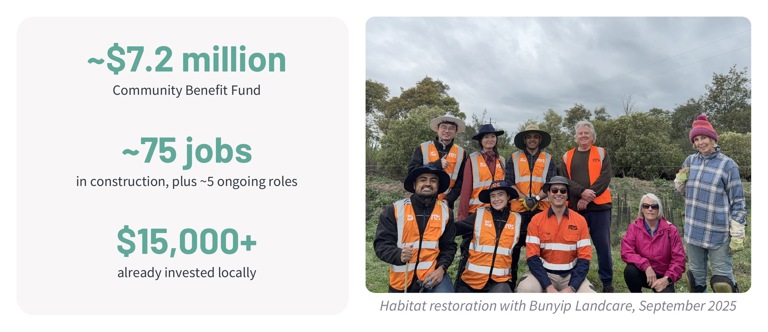
The Project will provide an ongoing financial contribution to the local community throughout operations of $150 for every megawatt-hour of project nameplate capacity each year. Nameplate capacity is the maximum storage capacity of the battery — for the proposed Bunyip North BESS, this could provide $7.2 million over 20 years of operation.
How the funding is used will be shaped by local priorities identified through consultation and a Social Impact Assessment being prepared by ERM, which includes interviews with residents, neighbours, community organisations and service providers. Contact Us with your ideas, which may include:
- Sponsorships for environmental or sustainability initiatives
- Partnerships with community organisations or schools
- Enhancement of local amenities or open space
Local Jobs and Economic Activity
The Project is expected to deliver a boost to the local economy during both construction and operations, with direct employment and opportunities for local contractors, suppliers, and service providers. The Project is expected to support around 75 direct jobs during construction and about five ongoing operational roles.
Local, regional and First Nations suppliers can Contact Us to register interest — download the Supplier Information Fact Sheet for the opportunity areas and anticipated procurement approach.

Reliable and Affordable Clean Energy
By storing excess renewable energy generated during the day and dispatching it during peak demand periods, the BESS will help reduce pressure on the grid, support electricity reliability, and contribute to lower energy prices over time.
- Stabilising the grid: Batteries provide fast-response energy during periods of high demand or unexpected outages, ensuring communities and businesses have access to dependable electricity, even during emergencies.
- Supporting decarbonisation goals: By storing surplus solar and wind generation, batteries help reduce reliance on fossil, supporting Australia’s emissions reduction commitments.