
Bunyip North Energy Storage
A new energy storage project in Australia
Layout and Technical Assessments
We welcome your feedback. Visit Contact Us to have your say, register for future updates or contact the team.
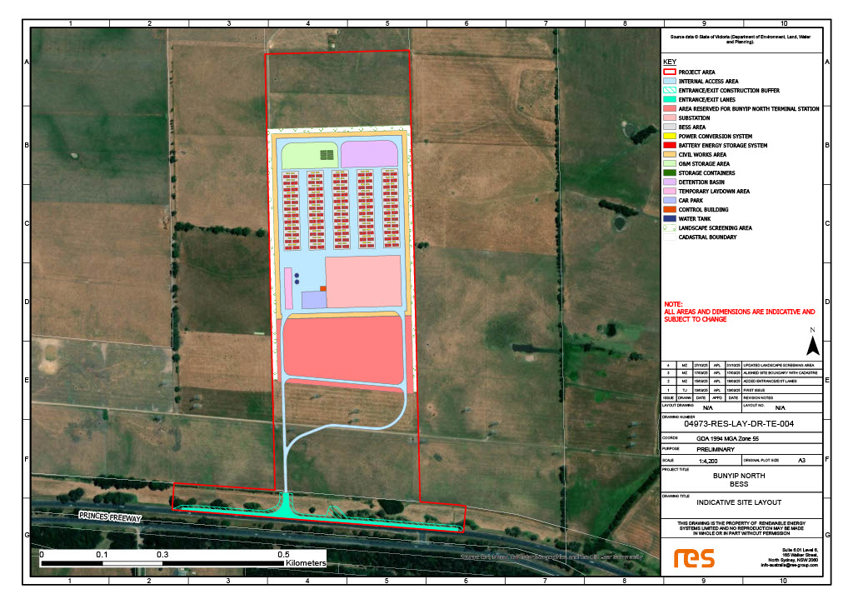
Indicative Layout
An indicative layout has been prepared to show the proposed arrangement of project components within the project area, including access and grid connection infrastructure. Project components include:
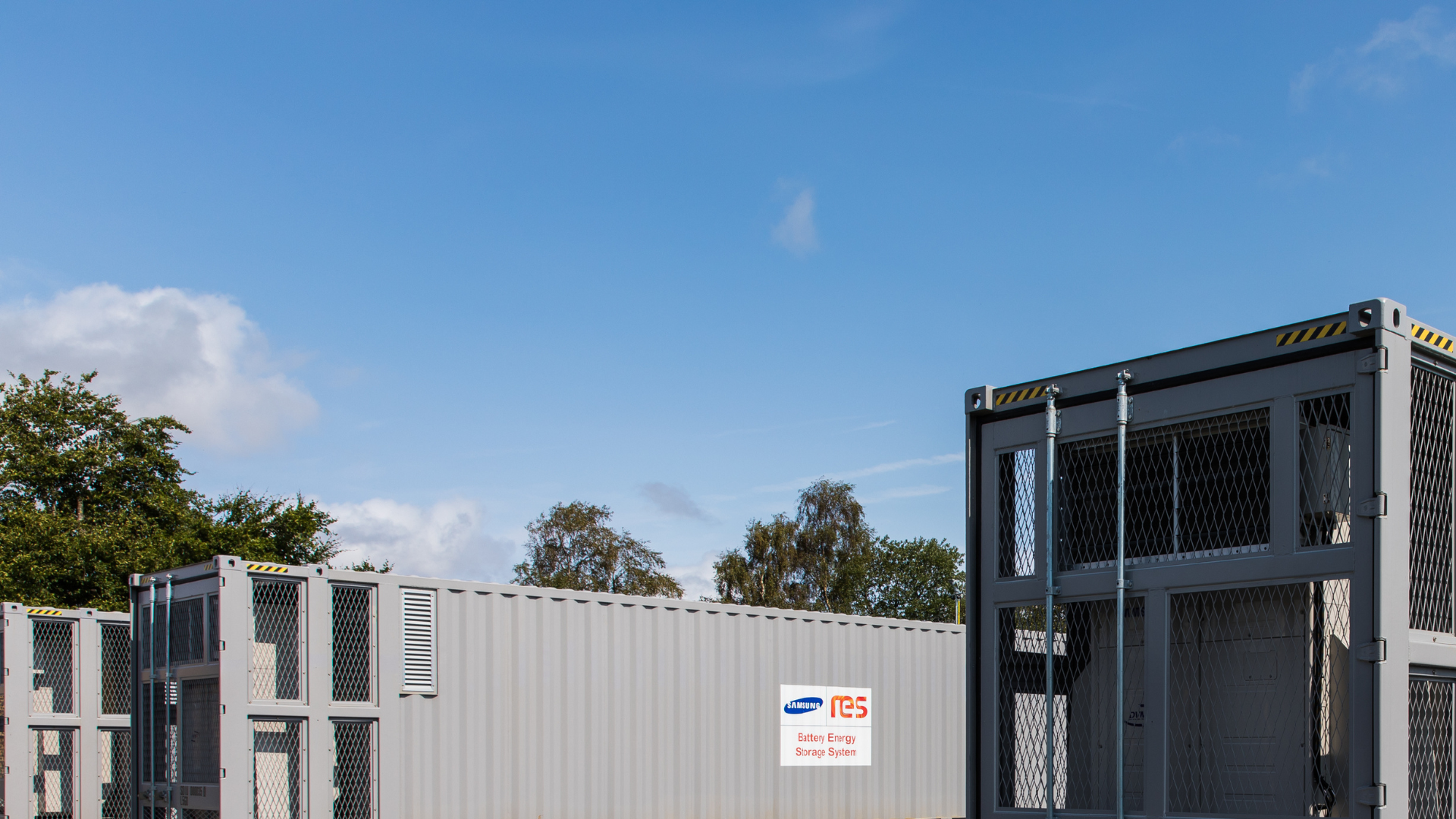
- Battery energy storage units (containerised battery units) and associated electrical equipment.
- Power conversion equipment (inverters/transformers) and on‑site electrical infrastructure to enable safe operation.
- Grid connection infrastructure, including the on‑site substation and terminal station.
- Supporting infrastructure to enable safe operation and site management, including a control building/control systems, internal access and parking, security fencing/lighting, firefighting water storage and fire safety systems, stormwater management, landscaping, and temporary construction areas.
The layout will be refined through detailed design and consultation with relevant authorities such as Cardinia Shire Council, the Department of Transport and Planning, Melbourne Water, Country Fire Authority (CFA) and the Department of Energy, Environment and Climate Action.
Technical Assessments
The following technical assessments have been carried out as part of the planning application submission. Full technical reports will be available during the formal public exhibition period as part of the planning application. For more information, see Planning Pathway & Timeline.
Ecology
- Detailed field surveys within and surrounding the project area have informed the understanding of biodiversity values and constraints relevant to the Project.
- The project area has been designed to support an appropriate buffer from higher-quality native vegetation and aquatic habitat (including potential habitat for threatened species) that were identified around Cannibal Creek to the Project's north.
- Mitigation measures including the established buffer, maintenance of avoidance strategies and vegetation management support the project proceeding with minimal environmental risk.
Hydrology
- Baseline flood and surface water modelling has been undertaken to understand flood behaviour and inform a flood‑resilient layout for the project within the project area.
- The assessment applies hydrologic and hydraulic modelling, with consideration of climate change, to guide infrastructure siting and stormwater planning with Cannibal Creek and Tea Tree Creek in mind.
Fire and Risk Management
- A Risk Management Plan sets out how the project addresses requirements as detailed in the CFA Guidelines, including emergency access considerations, firefighting water supply, fire breaks, separation distances and fire detection/suppression provisions.
- The plan details the measures required to manage fire and bushfire risks through design, construction, commissioning and operation, including assessment against Clause 13.02‑1S (Bushfire Planning).
Noise
- The assessment considers operational noise limits against predicted operational noise from the project at nearby Noise Sensitive Areas (NSAs), in accordance with EPA Victoria’s Noise Protocol.
- The noise assessment indicates the project is expected to meet Victorian noise requirements at nearby homes during day, evening and night periods.
Traffic and Transport
- The Traffic Impact Assessment considers the surrounding road network, to confirm that the proposed access arrangement can accommodate construction and operational traffic.
- Project traffic is modelled to ensure it performs with good operating conditions, with minimal delays/queues expected.
Landscape and Visual
- A public viewpoint assessment is complete from multiple perspectives surrounding the project, to conclude how the project can be accommodated within the local landscape without unacceptable visual effects.
- Photomontages: